
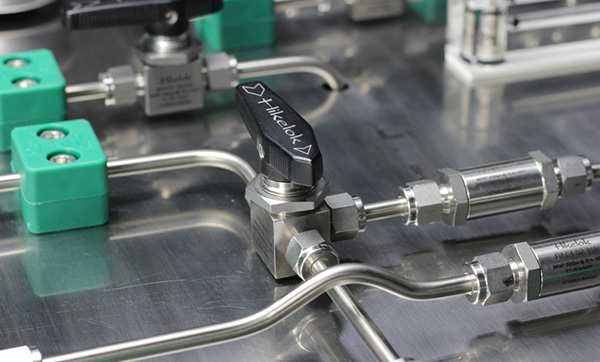
Pengantar Konektor: Mengidentifikasi Ulir dan Jarak Ulir
Fondasi sambungan ulir dan ujung
• Jenis ulir: ulir luar dan ulir dalam mengacu pada posisi ulir pada sambungan. Ulir luar menonjol di bagian luar sambungan, dan ulir dalam berada di bagian dalam sambungan. Ulir luar dimasukkan ke dalam ulir dalam.
• Jarak antar benang: Jarak antar benang adalah jarak antara benang-benang yang saling bersentuhan.
• Addendum dan akar: Ulir gigi memiliki puncak dan lembah, yang masing-masing disebut addendum dan akar. Permukaan datar antara ujung gigi dan akar gigi disebut sisi (flank).
Identifikasi jenis ulir
Jangka sorong, pengukur jarak ulir, dan panduan identifikasi jarak ulir dapat digunakan untuk menentukan apakah ulir tersebut meruncing atau lurus.
Ulir lurus (juga disebut ulir paralel atau ulir mekanis) tidak digunakan untuk penyegelan, tetapi digunakan untuk mengencangkan mur pada badan fitting pipa. Ulir ini harus bergantung pada faktor lain untuk membentuk segel kedap bocor, seperti gasket, O-ring, atau kontak logam ke logam.
Ulir tirus (juga disebut ulir dinamis) dapat disegel ketika sisi ulir luar dan dalam ditarik bersama. Perlu menggunakan sealant ulir atau pita ulir untuk mengisi celah antara puncak gigi dan akar gigi untuk mencegah kebocoran cairan sistem pada sambungan.
Mengukur diameter ulir
Gunakan jangka sorong lagi untuk mengukur diameter ulir luar atau ulir dalam nominal dari ujung gigi ke ujung gigi. Untuk ulir lurus, ukur setiap ulir penuh. Untuk ulir tirus, ukur ulir penuh keempat atau kelima.
Tentukan nadanya
Gunakan alat pengukur ulir (juga disebut sisir ulir) untuk memeriksa ulir terhadap setiap bentuk hingga Anda menemukan kecocokan yang sempurna.
Tetapkan standar nada
Langkah terakhir adalah menetapkan standar ulir. Setelah menentukan jenis kelamin, tipe, diameter nominal, dan jarak ulir, panduan identifikasi ulir dapat digunakan untuk mengidentifikasi standar ulir tersebut.
Introduction to Connectors: Identifying Threads and Thread Spacing
Foundations of threaded and end connections
• Thread type: outer thread and inner thread refer to the position of the thread in the connection. The outer threads protrude on the outside of the joint, and the inner threads are on the inside of the joint. The outer thread is inserted into the inner thread.
• Inter-thread spacing: Inter-thread spacing is the distance between the threads that touch each other.
• Addendum and root: The tooth thread has a peak and a valley, which are called the addendum and root respectively. The flat surface between the tip of the tooth and the root of the tooth is called the flank.
Identify the thread type
Vernier calipers, thread pitch gauges, and thread pitch identification guides can be used to determine whether a thread is tapered or straight.
Straight threads (also called parallel threads or mechanical threads) are not used for sealing, but are used to tighten the nuts on the pipe fitting body. These threads must rely on other factors to form a leak-tight seal, such as gaskets, O-rings, or metal-to-metal contact.
Tapered threads (also called dynamic threads) can be sealed when the outer and inner thread sides are pulled together. It is necessary to use thread sealant or thread tape to fill the gap between the tooth apex and the tooth root to prevent system fluid leakage at the joint.
Measuring thread diameter
Use the caliper again to measure the nominal outer thread or inner thread diameter from tooth tip to tooth tip. For straight threads, measure each full thread. For tapered threads, measure the fourth or fifth full thread.
Determine the tone
Use a thread gauge (also called a thread comb) to check the thread against each shape until you find the perfect fit.
Set tone standards
The final step is to establish thread standards. After determining the gender, type, nominal diameter and pitch of the thread, the thread identification guide can be used to identify the standard of the thread.