
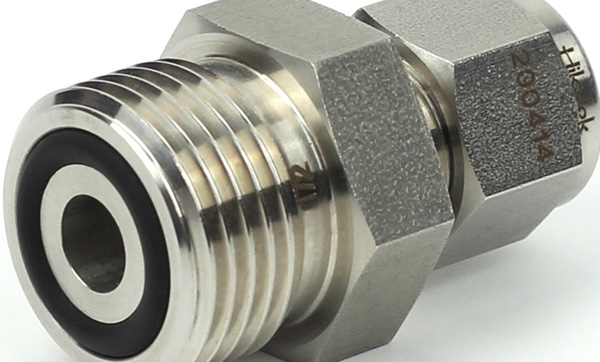
Konstruksi sistem fluida industri tidak dapat dipisahkan darifitting pipa instrumentasiSebagai sambungan. Dalam berbagai aplikasi seperti lingkungan bertekanan tinggi, kondisi kerja ekstrem, atau transportasi gas-cair yang berbahaya, fitting berulir berukuran kecil dapat dilihat di mana-mana. Kinerja unggulnya dalam ketahanan tekanan, ketahanan getaran, dan penyegelan membantu sistem fluida beroperasi lebih aman dan stabil, sehingga dipercaya dan digunakan oleh lebih banyak orang.
Untuk membangun sistem fluida yang aman, premisnya adalah memilih ulir yang tepat. Jika Anda ingin memilih ulir yang tepat, Anda perlu mengidentifikasinya terlebih dahulu.
Jenis benang umum Hikelok
Ada dua jenis ulir yang umum digunakan oleh Hikelok, yaitu ulir penghubung yang terbagi menjadi ulir M dan ulir UN, dan ulir pipa yang terbagi menjadi ulir NPT, ulir BSPP, dan ulir BSPT. Makalah ini terutama membahas tentang hal tersebut.ulir pipaSebagai contoh.
Jenis-jenis ulir pipa
(1) Ulir NPT(Ulir Pipa Standar Nasional Amerika), menggunakan standar ASME B1 20.1, sudut profil gigi adalah 60°, bagian atas dan bawah gigi berada dalam keadaan bidang datar, dan kemiringan ulir kerucut adalah 1:16, yang umumnya disebut ulir tirus.
(2) Utas BSPP, yang sesuai dengan ulir G (British Standard Parallel Pipe), menggunakan standar ISO 228-1, sudut profil gigi adalah 55°, bagian atas dan bawah gigi berbentuk busur, dan ulir dalam dan luar adalah ulir pipa silindris, yang umumnya disebut ulir paralel.
(3) Ulir BSPT, yang sesuai dengan ulir R (ulir pipa penyegel umum Inggris), menggunakan standar ISO 7-1, sudut profil gigi adalah 55°, bagian atas dan bawah gigi berbentuk busur lingkaran, dan kemiringan ulir kerucut adalah 1:16. Umumnya dikenal sebagai ulir tirus.
Bagaimana cara memastikan spesifikasi tiga ulir pipa?
Dari informasi di atas, kita dapat mengetahui bahwa ulir pipa juga dapat diklasifikasikan menjadi dua kategori: ulir tirus dan ulir sejajar. Oleh karena itu, ketika membedakan ulir, kita harus terlebih dahulu membedakan apakah itu ulir tirus atau ulir sejajar.
Identifikasi awal
Penilaian awal dapat dilakukan berdasarkan apakah ulir tersebut memiliki kemiringan (taper). Gunakan jangka sorong untuk mengukur diameter antara ujung gigi pada ulir penuh pertama, keempat, dan terakhir sesuai dengan posisi yang ditunjukkan pada gambar di bawah. Jika diameter bertambah atau berkurang secara bertahap, hal itu menunjukkan bahwa ulir tersebut memiliki kemiringan, yang merupakan ulir BSPT atau ulir NPT pada ulir tirus. Jika semua diameter sama, hal itu menunjukkan bahwa ulir tersebut tidak memiliki kemiringan dan merupakan ulir paralel BSPP.
Konfirmasi lebih lanjut
Hanya ada satu ulir BSPP untuk ulir paralel, sehingga perlu dibedakan lebih lanjut apakah itu ulir BSPT atau ulir NPT pada ulir kerucut.
Pengukuran sudut profil gigiDinilai berdasarkan sudut profil gigi, ulir BSPT memiliki sudut profil gigi 55° dan ulir NPT memiliki sudut profil gigi 60°.
Ulir BSPT Ulir NPT
Perhatikan bentuk giginyaTentukan berdasarkan bentuk bagian atas dan bawah ulir. Ulir BSPT memiliki bagian atas dan bawah yang bulat, sedangkan ulir NPT memiliki bagian atas dan bawah yang datar.
Ulir BSPT Ulir NPT
Putusan akhir
Dua alat berikut diperlukan untuk memastikan jenis ulir secara akurat.
Metode 1: Gunakan alat ukur ulir dan pilih alat ukur ulir yang sesuai untuk konfirmasi akhir. Ulir yang diukur dikencangkan dengan sempurna menggunakan alat ukur ulir. Jika aturan pemeriksaan alat ukur ulir yang sesuai terpenuhi, spesifikasi ulir tersebut adalah spesifikasi aktual dari ulir yang diukur.
Metode 2: gunakan alat ukur gigi dan pilih alat ukur gigi yang sesuai untuk perbandingan hingga alat ukur gigi tersebut pas sempurna dengan ulir yang diukur, maka spesifikasi ulir tersebut adalah spesifikasi sebenarnya dari ulir yang diukur.
Selain metode-metode di atas, kita juga dapat memeriksa standar ulir yang sesuai dari ketiga ulir tersebut setelah mengukur diameter mahkota ulir dengan jangka sorong dan menilai ulir tirus dan ulir sejajar, serta mencari spesifikasi ulir dengan diameter mahkota ulir yang sama dengan ulir yang diukur dalam standar ulir untuk konfirmasi lebih lanjut, tetapi penilaian akhir tetap membutuhkan bantuan alat ukur ulir dan alat ukur gigi.
Saat membeli fitting pipa Hikelok, disarankan untuk memasang dan menggunakannya bersamaan dengan katup kontrol Hikelok. Anda dapat memilihkatup jarum, katup bola, katup pelepas proporsional, katup pengukur, katup periksa, manifold katup, sistem pengambilan sampel, dan lain sebagainya, sehingga membuat sambungan sistem fluida lebih aman dan efisien.
Untuk detail pemesanan lebih lanjut, silakan lihat pilihan yang tersedia.katalogpadaSitus web resmi HikelokJika Anda memiliki pertanyaan terkait pemilihan produk, silakan hubungi staf penjualan profesional online Hikelok yang beroperasi 24 jam.
Industrial fluid system construction cannot be separated from instrumentation pipe fittings as connections. In various applications such as high-pressure environments, extreme working conditions or dangerous gas-liquid transportation, small-sized threaded fittings can be seen everywhere. Its superior performance in pressure resistance, vibration resistance and sealing helps the fluid system operate more safely and stably, so it is trusted and used by more people.
To build a safe fluid system, the premise is to choose the right thread. If you want to choose the right thread, you need to identify it first.
Common thread types Hikelok
There are two types of threads commonly used by Hikelok, namely connecting threads which are divided into M threads and UN threads, and pipe threads which are divided into NPT threads, BSPP threads and BSPT threads. This paper mainly discusses such things. pipe threads For example.
Types of pipe threads
(1) NPT thread(American National Standard Pipe Thread), using the ASME B1 20.1 standard, the tooth profile angle is 60°, the top and bottom of the tooth are in a flat plane state, and the slope of the conical thread is 1: 16, which is generally called tapered thread.
(2) BSPP thread, which corresponds to G (British Standard Parallel Pipe) thread, uses ISO 228-1 standard, the tooth profile angle is 55°, the top and bottom of the tooth are arc-shaped, and the inner and outer threads are cylindrical pipe threads, which are generally called parallel threads.
(3) BSPT thread, which corresponds to R thread (British common sealing pipe thread), uses ISO 7-1 standard, the tooth profile angle is 55°, the top and bottom of the tooth are circular arcs, and the inclination of the cone thread is 1: 16. Commonly known as tapered thread.
How to confirm the specifications of three pipe threads?
From the above information, we can know that pipe threads can also be classified into two categories: tapered threads and parallel threads. Therefore, when distinguishing threads, we must first distinguish whether they are tapered threads or parallel threads.
Early identification
An initial assessment can be made based on whether the thread has a taper. Use a caliper to measure the diameter between the tips of the teeth on the first, fourth, and last full threads according to the positions shown in the figure below. If the diameter increases or decreases gradually, it indicates that the thread has a bevel, which is a BSPT thread or an NPT thread in tapered threads. If all diameters are the same, it indicates that the thread has no slope and is a BSPP parallel thread.
Further confirmation
There is only one BSPP thread for parallel threads, so it needs to be differentiated further whether it is a BSPT thread or an NPT thread on a conical thread.
Tooth profile angle measurement Judging based on the tooth profile angle, BSPT threads have a tooth profile angle of 55° and NPT threads have a tooth profile angle of 60°.
BSPT thread NPT thread
Pay attention to the shape of the teeth. Determine based on the shape of the top and bottom of the thread. BSPT threads have a rounded top and bottom, while NPT threads have a flat top and bottom.
BSPT thread NPT thread
Final verdict
The following two tools are required to accurately ensure thread type.
Method 1: Use a thread gauge and select a suitable thread gauge for final confirmation. The measured thread is tightened perfectly using a thread gauge. If the appropriate thread measuring instrument inspection rules are met, the thread specifications are the actual specifications of the thread being measured.
Method 2: use a tooth measuring tool and select a suitable tooth measuring tool for comparison until the tooth measuring tool fits perfectly with the thread being measured, then the thread specifications are the actual specifications of the thread being measured.
In addition to the above methods, we can also check the corresponding thread standards of the three threads after measuring the thread crown diameter with a caliper and evaluating the tapered thread and parallel thread, and look for the thread specifications with the same thread crown diameter as the thread measured in the thread standard for further confirmation, but the final judgment still requires the help of a thread measuring instrument and a tooth measuring instrument.
When buying pipe fittings Hikelok, it is recommended to install and use it together with the control valve Hikelok. You can choose needle valves, ball valves, proportional relief valves, metering valves, check valves, valve manifolds, sampling systems, and so on, thus making the fluid system connection safer and more efficient.
For further ordering details, please see the available options. catalog on Hikelok official website If you have any questions regarding product selection, please contact the professional online sales staff Hikelokwhich operates 24 hours.