
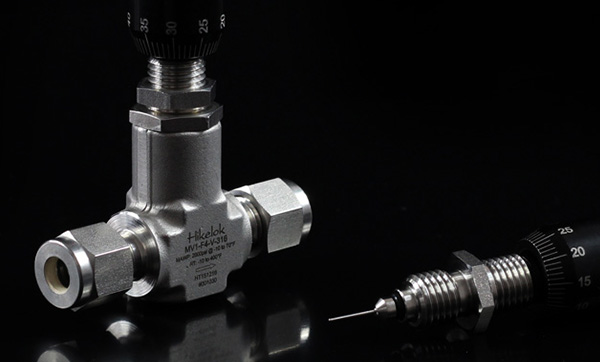
Seluruh mesin adalah unit paling dasar darikatupPerakitan katup terdiri dari beberapa bagian (seperti penutup katup, cakram katup, dll.). Proses perakitan beberapa bagian disebut perakitan komponen, dan proses perakitan beberapa bagian dan komponen disebut perakitan total. Pekerjaan perakitan sangat berpengaruh pada kualitas produk. Meskipun desainnya akurat dan komponennya berkualitas, jika perakitannya tidak tepat, katup tidak akan memenuhi persyaratan peraturan, dan bahkan dapat menyebabkan kebocoran segel.
Ada tiga metode umum untuk perakitan katup, yaitu metode pertukaran lengkap, metode pertukaran terbatas, dan metode perbaikan.
Metode pertukaran lengkap
Ketika katup dirakit dengan metode pertukaran lengkap, setiap bagian katup dapat dirakit tanpa perbaikan dan pemilihan apa pun, dan produk dapat memenuhi persyaratan teknis yang ditentukan setelah perakitan. Pada saat ini, bagian-bagian katup harus diproses sepenuhnya sesuai dengan persyaratan desain untuk memenuhi persyaratan akurasi dimensi dan toleransi geometris. Keuntungan dari metode pertukaran lengkap adalah: pekerjaan perakitan sederhana dan ekonomis, tenaga kerja tidak memerlukan tingkat keterampilan yang tinggi, efisiensi produksi proses perakitan tinggi, dan mudah untuk mengatur jalur perakitan dan produksi profesional. Namun, secara absolut, ketika perakitan penggantian lengkap diadopsi, akurasi pemesinan bagian-bagiannya harus lebih tinggi. Metode ini cocok untuk katup globe, katup periksa, katup bola, dan katup lain dengan struktur sederhana dan diameter kecil hingga menengah.
Metode pertukaran terbatas
Katup dirakit dengan metode pertukaran terbatas, dan seluruh mesin dapat diproses sesuai dengan presisi ekonomis. Saat perakitan, ukuran tertentu dengan efek penyesuaian dan kompensasi dapat dipilih untuk mencapai presisi perakitan yang ditentukan. Prinsip metode pemilihan sama dengan metode perbaikan, tetapi cara mengubah ukuran cincin kompensasi berbeda. Yang pertama adalah mengubah ukuran cincin kompensasi dengan memilih aksesori, sedangkan yang kedua adalah mengubah ukuran cincin kompensasi dengan memangkas aksesori. Misalnya: inti atas dan gasket pengatur katup gerbang baji ram ganda tipe katup kontrol, gasket pengatur di antara dua badan katup bola terpisah, dll., adalah memilih bagian khusus sebagai bagian kompensasi dalam rantai dimensi yang terkait dengan akurasi perakitan, dan mencapai akurasi perakitan yang dibutuhkan dengan menyesuaikan ketebalan gasket. Untuk memastikan bahwa bagian kompensasi tetap dapat dipilih dalam berbagai situasi, perlu untuk memproduksi satu set bagian kompensasi ring dan selongsong poros dengan ketebalan dan ukuran yang berbeda terlebih dahulu untuk pemilihan model katup kontrol hidrolik selama perakitan.
Metode perbaikan
Katup dirakit dengan metode perbaikan, bagian-bagiannya dapat diproses sesuai dengan presisi ekonomis, dan kemudian ukuran tertentu dengan efek penyesuaian dan kompensasi dapat diperbaiki selama perakitan, sehingga mencapai tujuan perakitan yang ditentukan. Misalnya, pintu gerbang dan badan katup dari katup gerbang baji, karena biaya pemrosesan yang tinggi untuk mewujudkan persyaratan pertukaran, sebagian besar produsen mengadopsi proses perbaikan. Artinya, dalam penggerindaan akhir permukaan penyegelan pintu gerbang untuk mengontrol ukuran bukaan, pelat harus dicocokkan sesuai dengan ukuran bukaan permukaan penyegelan badan katup, sehingga mencapai persyaratan penyegelan akhir. Metode ini meningkatkan proses pencocokan pelat, tetapi sangat menyederhanakan persyaratan akurasi dimensi dari proses pemrosesan sebelumnya. Pengoperasian terampil proses pencocokan pelat oleh personel khusus tidak akan memengaruhi efisiensi produksi secara keseluruhan. Proses perakitan katup: katup dirakit satu per satu di lokasi tetap. Perakitan bagian dan komponen serta perakitan umum katup dilakukan di bengkel perakitan, dan semua bagian dan komponen yang diperlukan diangkut ke lokasi perakitan. Biasanya, ada beberapa kelompok pekerja yang bertanggung jawab untuk perakitan komponen dan perakitan umum secara bersamaan, yang tidak hanya mempersingkat siklus perakitan, tetapi juga mempermudah penggunaan alat perakitan khusus, dan memiliki persyaratan yang rendah untuk tingkat keahlian teknis pekerja.
The whole machine is the most basic unit of the valve. Valve valve assembly consists of several parts (such as valve cover, valve disc, etc.). The process of assembling several parts is called component assembly, and the process of assembling several parts and components is called total assembly. Assembly work greatly influences product quality. Even if the design is accurate and the components are quality, if the assembly is improper, the valve will not meet regulatory requirements, and may even cause seal leakage.
There are three general methods for valve assembly, namely complete exchange method, limited exchange method and repair method.
Complete interchangeability method
When the valve is assembled by complete exchange method, each part of the valve can be assembled without any repair and selection, and the product can meet the specified technical requirements after assembly. At this time, the valve parts must be processed in full accordance with the design requirements to meet the requirements of dimensional accuracy and geometric tolerance. The advantages of the complete exchange method are: the assembly work is simple and economical, the labor does not require a high level of skills, the production efficiency of the assembly process is high, and it is easy to set up professional assembly and production lines. However, in absolute terms, when complete replacement assembly is adopted, the machining accuracy of the parts must be higher. This method is suitable for globe valves, check valves, ball valves and other valves with simple structures and small to medium diameters.
Limited interchangeability method
The valve is assembled by limited interchangeability method, and the whole machine can be processed according to economical precision. When assembling, a certain size with adjustment and compensation effects can be selected to achieve the specified assembly precision. The principle of the selection method is the same as the repair method, but the way to change the size of the compensation ring is different. The first is to change the size of the compensation ring by selecting accessories, while the second is to change the size of the compensation ring by trimming accessories. For example: the upper core and regulating gasket of a control valve type double ram wedge gate valve, the regulating gasket between two separate ball valve bodies, etc., is to select special parts as compensation parts in the dimensional chain related to assembly accuracy, and achieve the required assembly accuracy by adjusting the thickness of the gasket. In order to ensure that the fixed compensation parts can be selected in various situations, it is necessary to produce a set of ring and shaft sleeve compensation parts with different thicknesses and sizes in advance for the hydraulic control valve model selection during assembly.
Repair method
The valve is assembled by repair method, the parts can be processed according to economical precision, and then a certain size with adjustment and compensation effects can be fixed during assembly, thereby achieving the specified assembly purpose. For example, the gate and valve body of wedge gate valves, due to the high processing costs to realize interchangeability requirements, most manufacturers adopt repair processes. That is, in the final grinding of the gate sealing surface to control the opening size, the plate must be matched according to the opening size of the valve body sealing surface, so as to achieve the final sealing requirements. This method improves the plate matching process, but greatly simplifies the dimensional accuracy requirements of previous processing processes. Skillful operation of the plate matching process by specialized personnel will not affect the overall production efficiency. Valve assembly process: valves are assembled one by one at a fixed location. The assembly of parts and components and the general assembly of the valve are carried out in the assembly shop, and all necessary parts and components are transported to the assembly site. Usually, there are several groups of workers responsible for component assembly and general assembly simultaneously, which not only shortens the assembly cycle, but also makes it easier to use special assembly tools, and has low requirements for the technical skill level of workers.